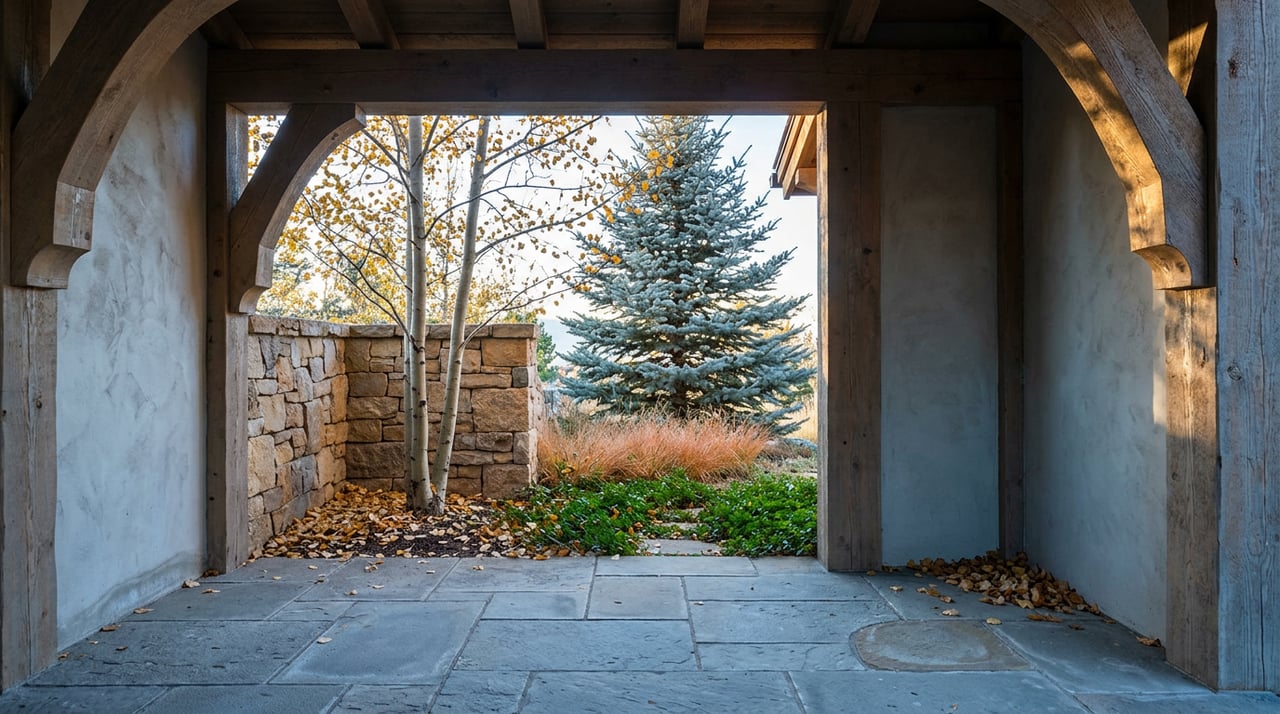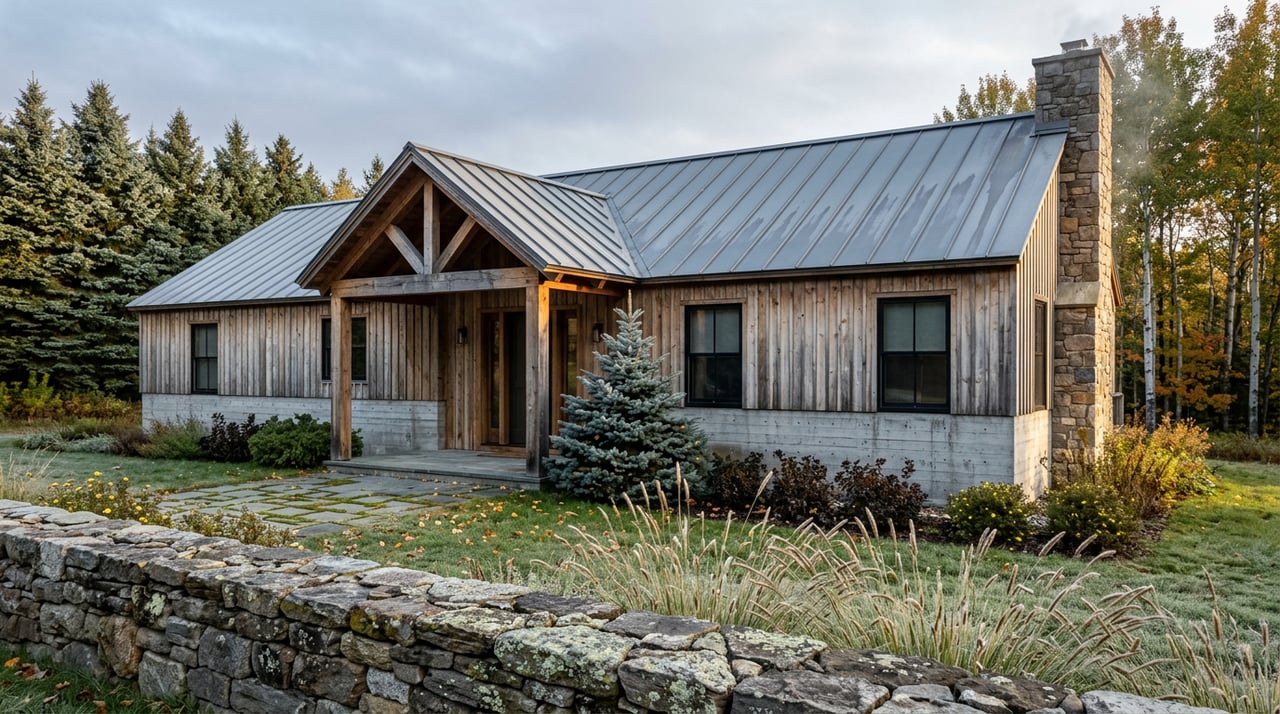
As Telluride Style reported, Terry Tice, a former Telluride Town Council member, once called the Free Box "a fundamental commitment to the redistribution of resources." For fifty years, that commitment came with no hours, no cameras, and no rulebook. You dropped off a coat at midnight if you felt like it. You picked through what was left at 2 a.m. on your way home from the Sheridan. The arrangement was informal.
The Free Box's arrangements changed twice in about a year. In November 2024, it moved into its first permanent, town-owned building. On December 22, 2025, the Town of Telluride began closing it each night from 10 p.m. to 6 a.m. After decades of informal operation, it now has a permanent address and posted overnight hours.
Two Cardboard Boxes Outside a Health Food Store
The Free Box started in 1975 when a resident left a box of clothing outside the old Lost Branch Health Food Store. It wasn't a program. It was a gesture, and it worked, because more people kept adding to it. As Telluride Style recounts, Heather Bachman and Kathy Greene became the first people to treat it as something worth maintaining, building a sturdier structure on the corner of Pine Street and Colorado Avenue with wood donated by Sterling Spencer. That version lasted until a 1983 paving project tore it out. Residents pushed back hard enough that the town approved a replacement, and the Free Box kept going on private property for the next four decades, moved and rebuilt as needed while remaining informal.
Here's the shape of those fifty years:
| Year | What happened |
|---|---|
| 1975 | First Free Box appears outside Lost Branch Health Food Store |
| 1983 | Original structure removed during a street paving project; residents rally to rebuild it |
| Nov. 4, 2024 | Free Box moves to its first town-owned, permanent building on Willow Street |
| Dec. 22, 2025 | Town begins closing the Free Box nightly from 10 p.m. to 6 a.m. after vandalism and illegal dumping |
A Town-Owned Building, At Last
For nearly forty years the Free Box sat on private land, which meant its survival depended on the patience of whoever owned that lot. On November 4, 2024, that arrangement ended. The town gave the Free Box a permanent home at 151 S. Willow Street, built into the Voodoo Employee Rental Housing Project across from the post office, and marked the move with a ribbon cutting. Pieces of the old structure were donated to the Telluride Historical Museum, KOTO Radio, and Telluride Ski Patrol.
That was the first time in the Free Box's history that its address wasn't a favor from a landowner. It was infrastructure now, built and owned the way the town builds anything else it intends to keep.
Nighttime Hours Begin
Following vandalism and illegal dumping, the town began closing the Free Box overnight about a year after it moved into its new building. As of December 22, 2025, it operates daily from 6 a.m. to 10 p.m., with security cameras monitoring it.
Chief Marshal Josh Comte framed the change as protective rather than punitive:
"This change is necessary to protect a community resource that is meant to be safe, accessible, and respectful for everyone. The Free Box works best when it is used as intended."
The move marks a new chapter for the Free Box: its permanent, town-sanctioned home now has posted daily hours.
What the Rules Actually Say
The town's guidelines are specific about what belongs and what doesn't. Furniture, trash, hazardous materials, broken items, food, and electronics are all prohibited now, a shift from the anything-goes era when a couch showing up on the sidewalk wasn't unusual. The remaining guidelines set out how to use the Free Box:
- Take what you need, leave what you don't
- No money changes hands, and no bartering on site
- No resale of Free Box items
- Items should be clean, usable, and something you'd hand to a neighbor
- Place donations inside the structure, not on the ground outside it
- Take only what you can carry
Reports of vandalism or dumping now go to the Telluride Marshals Department rather than getting sorted out informally by whoever happened to notice first. The full current policy is posted on the Town of Telluride's Free Box page.
Why Locals Keep Showing Up
In a Telluride Style report, Erin Ries, who has informally helped maintain the Free Box for years, described it as a daily stop. She's pulled pieces for the Telluride AIDS Benefit fashion show more than once, including a hat built from a lampshade and a glowing neon wrap she designed to show up under blacklight. Ries said, "I go pretty much every day to the Free Box to help clean it, and at times I get rewarded and I find all kinds of crazy things in there that are speaking to me." She also said, "Almost every year, the wearable art that I use for TAB comes from stuff I found in the Free Box."
The Free Box's community of users is part of its history, which stretches back to 1975. As Telluride Style recounts, KOTO DJ Buck Lowe once gave morning Free Box reports on air, treating new arrivals the way the station treated snow conditions. The box has always had its own informal media coverage, its own regulars, its own sense of what counts as a good find. The posted guidelines now set out how the Free Box operates alongside this longstanding community use.
For anyone new to town, the practical takeaway is straightforward. If you want an early start, get there close to 6 a.m. when it reopens. If you're dropping something off late, plan for before 10 p.m., because the door won't open again until morning. And if an item is prohibited by the guidelines, don't leave it at the Free Box.
The Free Box isn't disappearing, and it isn't becoming something unrecognizable. It's becoming something Telluride hasn't quite had before: an institution that runs on both community trust and a posted schedule, at the same time, in the same small building on Willow Street.
If you're already living here and thinking about what's next for your Telluride property, whether that's a move, a sale, or simply understanding how the town around your home continues to evolve, the O'Neill Stetina Group has spent years tracking the details that shape daily life here, not just the market data. Schedule a private consultation when you're ready to talk about your own next chapter in the box canyon.