If you are shopping for ski-in ski-out real estate in Mountain Village, the most important question is also the easiest one to blur: can you actually step outside and ski, or are you really buying a short walk to the gondola? In a market where convenience, rental use, and building economics can vary meaningfully from one property to the next, that distinction matters. This guide will help you evaluate ski access, ownership structure, amenities, and due diligence so you can buy with more clarity and fewer surprises. Let’s dive in.
Define ski access clearly
In Mountain Village, ski access exists on a spectrum. At one end are properties with direct skiable access to lifts or nearby runs, and at the other are residences that are very convenient but rely on a short walk to the gondola or mountain core.
Official local examples show why careful wording matters. Inn at Lost Creek is described by the town as having ski-in ski-out access to Village Express and Chondola, while Madeline Hotel & Residences is described as having premier ski-in ski-out access in town. The Peaks Resort & Spa is described as a short walk from the gondola while still offering ski-in ski-out access, which shows that access can be marketed broadly even when the route is not purely step-out-and-ski.
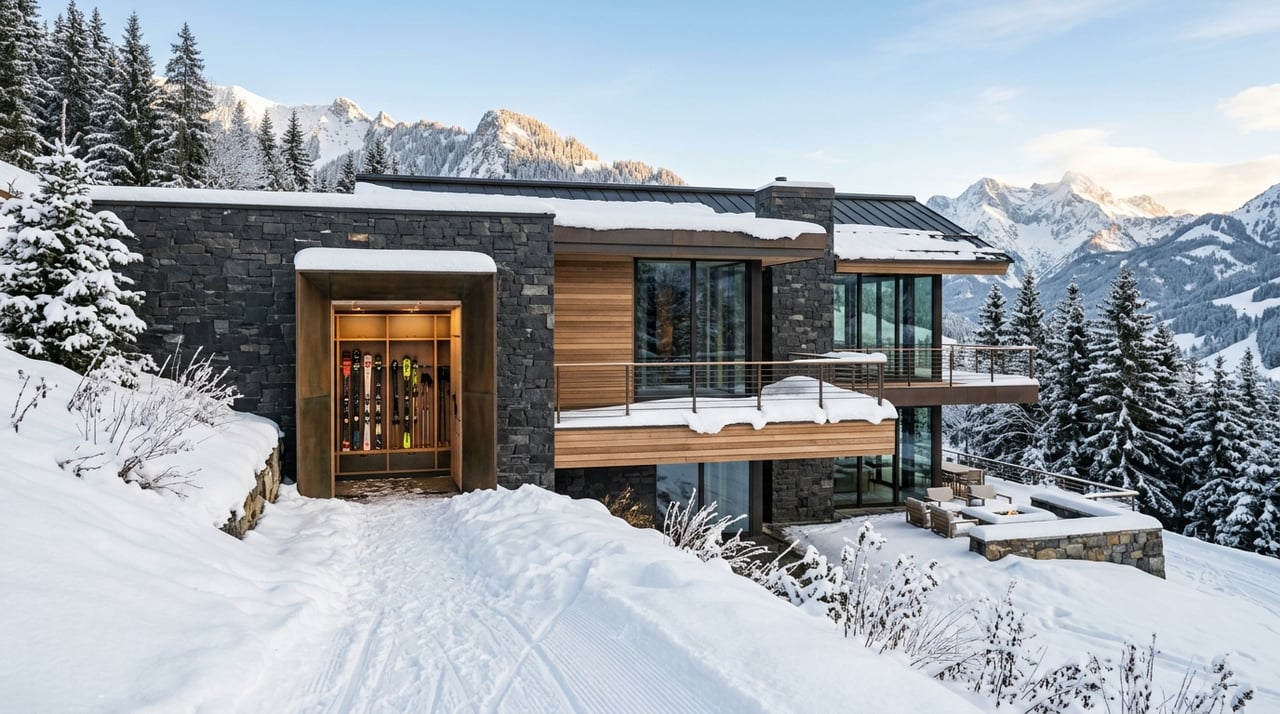
For you as a buyer, the practical test is simple: verify the actual path from the front door to a skiable surface. A true slope-side experience is different from walk-to-lift, gondola-core, or ski-valet-supported access, and that difference can affect daily use, guest experience, and long-term value.
Why the gondola matters
Mountain Village and Telluride are connected by the free Telluride-Mountain Village gondola, with stations in Telluride, San Sophia, Mountain Village, and Market Plaza. Official town information describes it as the first and only free public transportation system of its kind in North America.
That system is a major part of the ownership story in Mountain Village. Some residences are not truly slope-side, but they still offer excellent convenience because they sit near the gondola core, making it easy to move between the village, ski access points, and Telluride.
Questions to ask on every tour
Before you rely on a ski-in ski-out label, ask:
- Can you ski directly from the building, or do you need to walk first?
- Which lift, run, or access point do you actually use?
- Is access consistent throughout the season, or does it depend on conditions?
- Does the building rely on ski valet or shuttle support for part of the experience?
Look beyond the address
In Mountain Village, ownership structure and legal classification can matter just as much as location. Two residences may sit close to each other and offer similar views, but have very different rules, expenses, and use options.
Town planning materials note that Mountain Village developed under a framework with a density cap and multiple zoning designations. Within that system, several condo-style categories carry different use limits, configuration rules, parking requirements, and person-equivalent density.
That means your due diligence should go well beyond the listing description. You want to know not just where the property sits, but what the unit is legally defined to be.
Common classifications to verify
Town materials distinguish between several unit types, including:
- Condominium
- Lodge
- Efficiency lodge
- Hotel or efficiency hotel
- Hotbed-style lodging unit
These labels are not just technical. They can affect how a property may be used, whether short-term rental activity is contemplated, and how certain ownership costs are structured.
One local example underscores the point. The town notes that TMVOA dues for an Efficiency Lodge are one quarter of the cost for a Condominium designation. That is a meaningful reminder that association economics can differ sharply based on legal classification, not just finish level or square footage.
Fractional vs. whole ownership
Mountain Village also includes deeded fractional ownership in addition to whole ownership. Franz Klammer Lodge, for example, is described by the town as offering deeded fractional ownership opportunities alongside lodging-style services.
For some buyers, fractional ownership can be a fit if your priority is predictable use with less operational burden. If you want maximum flexibility, whole ownership may be the better route. The key is to match the ownership model to how you actually plan to use the property.
Compare the building, not just the unit
Mountain Village developed over multiple eras, with the ski area dating to the early 1970s and the town incorporating in 1995. Because of that history, not all slope-side or near-slope properties are comparable, even when they appear similar on paper.
A polished interior may tell only part of the story. Renovation age, mechanical systems, common-area condition, and reserve strength can all shape your ownership experience and future costs.
Building review checklist
As you compare options, focus on:
- Age of the building and major renovations
- Condition of roofs, windows, elevators, and mechanical systems
- HOA budget and reserve levels
- Scope of services included in dues
- Parking configuration and owner storage
- Guest arrival flow and ease of mountain access
In a luxury resort market, friction matters. A residence that is easy to lock, leave, and enjoy can outperform a larger or flashier option if the building runs smoothly and supports your lifestyle.
Amenities are part of the value
In Mountain Village, amenities are not just nice extras. They are often part of the core ownership value, especially for second-home buyers who want a more seamless experience.
Official town property pages highlight offerings such as ski valet, heated pools, spas, concierge-style service, airport shuttles, and convenient access to parking or the gondola at properties including Madeline, Peaks, Inn at Lost Creek, and Franz Klammer Lodge. Those features can reduce the operational burden of ownership, particularly if you visit for shorter stays or host guests often.
Amenities that can improve daily use
Depending on the building, useful amenities may include:
- Ski valet or direct gear support
- In-building dining or hospitality services
- Pool, spa, and wellness facilities
- Shuttle support
- Front desk or concierge-style assistance
- Easy owner parking and storage
For many buyers, this is where the real comparison happens. Two units with similar square footage can feel very different in practice if one building offers a smoother arrival, easier ski logistics, and better support for guests.
Understand rental use before you underwrite it
If rental income matters to your purchase, legal classification and town rules should be front and center. Mountain Village planning materials treat hotbed units as an important part of the local lodging economy, and the town identifies both hotbed inventory and short-term rental activity within its planning framework.
This matters because not every property should be evaluated the same way for rental use. Before you underwrite projected income, confirm whether short-term rental use is allowed for that specific unit and how the property is classified.
Local rental obligations to verify
According to Mountain Village sales-tax materials, owners who short-term rent must:
- Obtain a business license
- Register through MUNIRevs
- Remit applicable lodging and sales taxes
The same town materials list a 9.47% sales tax, a 4% lodging tax, and a 1.25% visitor benefit tax on lodging. The town also notes that online travel companies may collect and remit taxes for bookings made through their platforms, while owners remain responsible for direct bookings.
Because rental projections can look very different after taxes, fees, management, and usage limits, you should verify the current treatment for the specific unit with the town, your CPA, and your property manager before relying on gross numbers.
Review taxes and restrictions carefully
Property taxes in Colorado are formula-based. The Colorado Department of Local Affairs explains that the final tax bill is based on actual value, the assessment rate, and the local mill levy. It currently lists the 2026 residential local-government assessment rate at 6.8% and the school-district rate at 7.05%.
San Miguel County notes that the treasurer mails property-tax notices and collects and disburses taxes to the appropriate authorities. In practice, this means you should confirm the actual tax load for the unit you are considering rather than extrapolating from a neighboring residence.
Deed restrictions and housing rules
Some ownership opportunities in Mountain Village may carry deed restrictions or separate housing-related rules. The town’s Housing Authority administers deed-restricted properties, so it is important to confirm whether any occupancy, use, or resale restrictions apply.
This step is especially important in a market where inventory can be limited and opportunities move quickly. A fast-moving purchase still needs a disciplined review of what you can actually do with the asset.
Do not overlook design review
If you are buying with plans to remodel, combine units, or update exterior elements, local approvals may matter as much as HOA approval. Mountain Village states that its Design Review Board serves as the architectural review board as well as a planning and zoning advisory board.
That means certain exterior changes and redevelopment decisions may involve more than one layer of review. Before you close, understand who has authority over façade changes, windows, decks, mechanical equipment, or other visible modifications.
A smart due diligence framework
The cleanest ski-in ski-out purchase is rarely just about finding the prettiest residence. In Mountain Village, the stronger approach is to treat each opportunity as a combination of access, classification, building quality, operating rules, and long-term usability.
A practical due diligence checklist includes:
- Title review
- HOA documents and budget
- Unit classification
- Rental rules and permissions
- Business-license obligations if renting
- Design Review Board authority
- Any deed restrictions
- Actual route to ski access
When you evaluate all of those pieces together, you are more likely to choose a property that fits both your lifestyle and your risk tolerance.
If you are considering ski-in ski-out or gondola-core ownership in Mountain Village, working with an advisor who understands complex resort inventory can save time and sharpen your decisions. For discreet guidance on available opportunities, building-level differences, and a precise due diligence process, connect with O'Neill Stetina Group.
FAQs
What does ski-in ski-out mean in Mountain Village real estate?
- In Mountain Village, ski-in ski-out can range from direct skiable access at the door to properties that are highly convenient but rely on a short walk to the gondola, lift base, or ski services. The best way to evaluate it is to verify the actual route from the unit to a skiable surface.
What legal unit classification should you verify in Mountain Village?
- You should confirm whether the property is classified as a condominium, lodge, efficiency lodge, hotel-type unit, hotbed unit, or fractional ownership, because those labels can affect use, parking, density, dues, and rental expectations.
Are short-term rentals allowed for all Mountain Village ski properties?
- No. Rental use depends on the specific unit and its classification. If short-term rental is allowed, the town says owners must follow local licensing, registration, and tax-remittance requirements.
What local taxes apply to Mountain Village short-term rentals?
- Town materials list a 9.47% sales tax, a 4% lodging tax, and a 1.25% visitor benefit tax on lodging, though you should confirm current treatment for the specific property before underwriting income.
Why do HOA documents matter for Mountain Village ownership?
- HOA documents help you understand dues, reserve strength, building rules, maintenance responsibilities, and what services are included. In Mountain Village, association economics can vary materially by building type and legal designation.
Can Mountain Village remodel plans require town approval?
- Yes. The town says its Design Review Board serves as the architectural review board and planning and zoning advisory board, so some exterior changes and redevelopment decisions may require review beyond the HOA.